
About Me
Welcome to this website. My name is Tony Minshall. For more than a decade I poured my heart, my energy and more than £800,000 of my own money into Malkins Bank Golf Club because I love the place, the members and the wider community it serves.
In 2011 we invested heavily to revive the facility. We took a municipal course and made it better for ordinary people: we built a new clubhouse, covered the driving range, added six accommodation pods with en‑suite facilities and created a wedding venue. I took over the operation in 2013 and, drawing on my golfing experience and the support of our members and visitors, rapidly expanded the business so it could remain accessible and affordable for everyone who wanted to play.
Crucially, historic technical records show the site carried significant contamination long before we signed the lease. An Atkins report from 2007 recorded benzene levels on the site as high as 6,200 µg/L — a concentration that is hazardous to people. A further technical assessment by John Nicholson was signed off on 29 September 2011 and identifies multiple contaminants across the tip. Cheshire East Council then granted us a 50‑year lease on 1 October 2011. The existence and detail of these reports should have been apparent before the lease was signed and, as I will show on this site, they were not properly disclosed in the local searches we relied on.
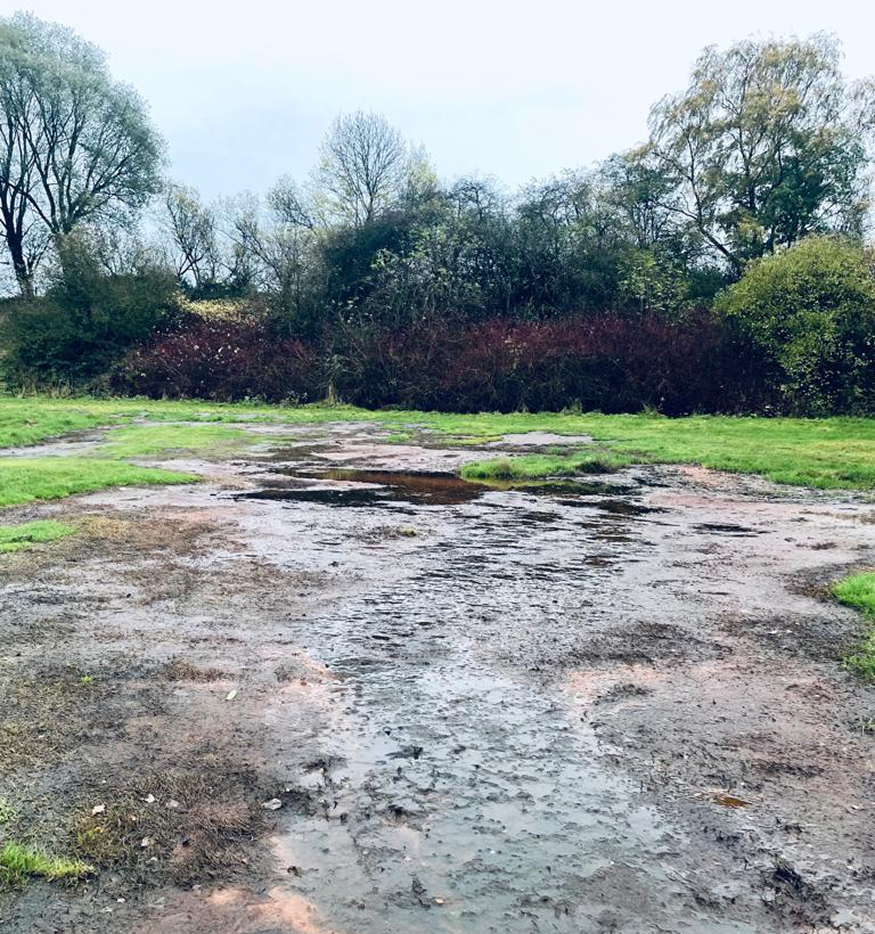
From about 2017–18 the course began to show worrying signs. Grass started to die back, fairways became flooded and one of our machines fell into an uncapped methane chamber that had been crudely covered with cardboard and old carpet. There were at least thirteen such chambers across the site. We had fences up on the second and third fairways for nearly two years while limited remedial work was undertaken. Sinkholes, damaged machinery, a near‑nonexistent drainage system and pollution in the brook that runs through the course all made operating the business increasingly difficult.
The landfill was never properly capped to the standards that should apply for a former waste tip. A correct remediation for a site of this nature would typically require a 1 m clay barrier, an effective drainage layer and at least 1.5 m of topsoil. Those measures were not in place. Under the contaminated‑land regime of the Environmental Protection Act 1990 (Part IIA), the council has duties to investigate, identify responsibility and, where necessary, secure remediation to protect public health and the environment. In my view the failure to ensure a proper cap and appropriate controls is unlawful and unacceptable for the people who live and work around this site.
On 4 November 2022 a severe flood pushed contaminants out of the tip and across the 15th fairway. I contacted the Environment Agency in December 2022 and repeatedly sought their assistance, but I received no meaningful response or site visit at that time. Our insurers initially acknowledged liability, but ultimately refused to meet the business‑interruption and legal‑expense claims we needed to recover. For three years I kept the club going from my own funds while the damage and liabilities mounted. On 30 May 2025 the company was placed into liquidation.
There are other deeply worrying developments: proposals to build new housing within 500 m of the tip are being progressed without clear evidence that the contamination and capping issues have been resolved and without proper protection for future residents. That is not acceptable while these fundamental questions remain unaddressed.
This website sets out the events, documents and photographs I have gathered — including the Atkins (2007) report, the John Nicholson assessment (signed 29 September 2011) and council correspondence dating back to the 1990s. I believe these records point to a pattern of failures and concealment by those responsible for the land, and I will seek to hold responsible parties to account. My aims are simple: to recover the money I invested so creditors can be repaid, to obtain remediation for the site, and to ensure that no other community facility is left exposed to the same risks.
If you care about protecting public land, preserving community amenities and demanding accountability from public bodies, please read what follows. The story of Malkins Bank is more than the story of one golf club — it is a warning about how historic landfill and institutional failures can devastate a community resource.